Big Bass Bonanza Slot Review: RTP 96.71%, 2,100x Max Win, Free Spins Maths and an Australian Reality Check

Last updated: 12 March 2026 · Written by: Claire Bennett, casino content editor persona, with a slots analyst and former venue floor attendant · Fact-checked against: provider paytable data, published maths models and peer-reviewed Australian gambling research.
Provider

Pragmatic Play (in partnership with Reel Kingdom)

RTP

96.71%

Volatility

Medium-high

Min bet

A$0.10

Max bet

A$250

Max win

2,100x
Big Bass Bonanza Slot Review RTP

The short version

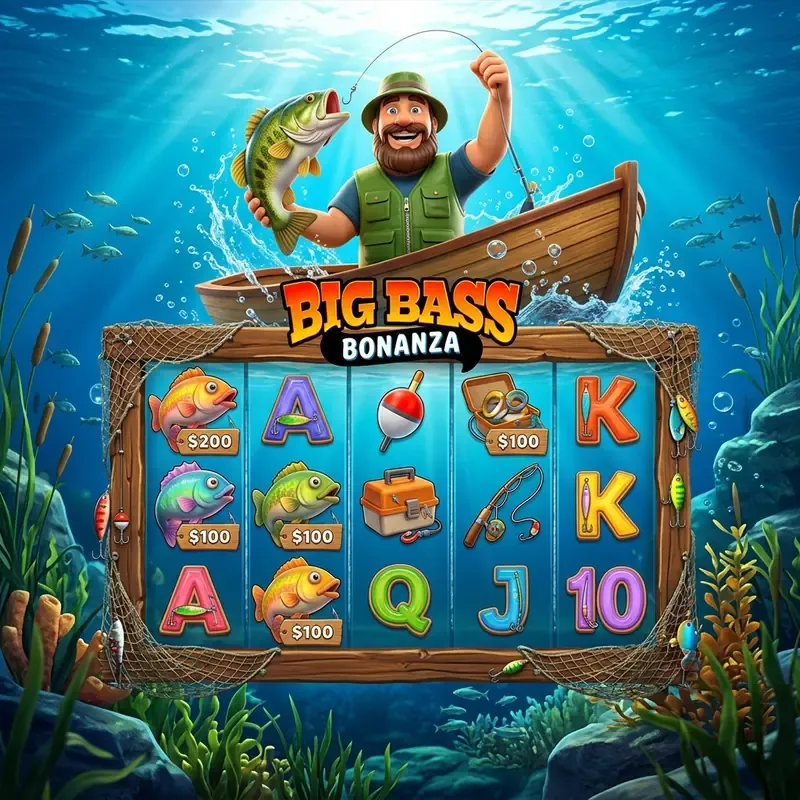
Big Bass Bonanza is a five-reel, three-row, ten-payline fishing slot from Pragmatic Play in partnership with Reel Kingdom, released in 2020. The base game is deliberately thin: card ranks, tackle boxes, dragonflies, a fishing reel and a float that pays 200x for five of a kind. Almost all of the win potential sits inside one feature, the free spins round, where the Fisherman wild collects the cash values printed on Money Fish symbols, and where a wild-collection meter unlocks x2, x3 and x10 multipliers.

Verdict in one line: a medium-high volatility slot with a well-above-average default RTP of 96.71% but a modest 2,100x ceiling. Good for players who enjoy a slow build towards one meaningful bonus round, poor value for anyone chasing life-changing multipliers or frequent wins.

Australian reality check: under the Interactive Gambling Act 2001, online slots cannot be lawfully supplied to Australian residents by any operator, licensed offshore or otherwise. Free demo play is a different matter, but it carries its own behavioural risks. Details, sources and help lines are further down this page.

The short version. Big Bass Bonanza

Gambling involves financial risk. This article is general information, not advice, and it is not a recommendation to gamble. If gambling is affecting you or someone you care about, contact Gambling Help Online on 1800 858 858 (free, 24/7) or visit gamblinghelponline.org.au.

Quick stats: Big Bass Bonanza slot technical characteristics

ParameterDetail
ProviderPragmatic Play / Reel Kingdom
Release date2020 (listed as 4 December 2020 by some databases and 14 February 2020 by others, see the fact-check notes)
Grid / paylines5 reels, 3 rows, 10 fixed paylines, left to right
Default RTP96.71% (reduced configurations of 95.67% and 94.60% also exist; some databases list 96.57%)
VolatilityMedium-high (several review sites classify it simply as "high")
Hit frequencyApproximately 1 in 7.58 spins (~13.19%) in published Big Bass maths models
Free spins frequencyApproximately 1 in 113 to 116 spins
Maximum win2,100x the stake, or A$525,000 at the maximum A$250 spin
Probability of maximum winRoughly 1 in 3.85 million spins (extremely remote)
Stake rangeA$0.10 to A$250.00 per spin (A$0.01 to A$2.50 per line)
Bonus buyNot available in the original title (present in later Big Bass releases)
Progressive jackpotNo
Autoplay / quick spinYes
Platform / mobile versionHTML5, browser-based, iOS and Android; distributed through online casinos and demo portals
Independent testingPragmatic Play titles are tested by GLI, BMM Testlabs and Gaming Associates

Reading the table in plain text: this is a ten-payline Pragmatic Play fishing slot with a default 96.71% RTP, medium-high volatility, a 2,100x win cap, free spins as the only significant feature, no feature buy, no jackpot, and full mobile support in the browser.

⚠️ Important: check the RTP before you wager anything

Pragmatic Play ships Big Bass Bonanza with multiple Return to Player configurations: 96.71%, 95.67% and 94.60%. Operators choose which build they deploy, and they are not always loud about it. Always open the in-game information menu, the (i) button, inside the specific site you are using and confirm the stated RTP before you risk money. A 2.11 percentage-point cut is a 66% increase in the theoretical house edge, from 3.29% to 5.40%.

Reading the table in plain text

Big Bass Bonanza as a product

Reels, paylines and the layout

Updated: according to Pragmatic Play's published game specification and paytable, the Big Bass Bonanza slot uses a five-reel, three-row layout with ten fixed paylines. This parameter comes from industry and provider product data rather than from independent academic research, so treat it as vendor-published specification rather than externally audited fact. Lines cannot be switched off; the player adjusts only the coin value and coins per line, which is why the minimum spin is A$0.10 and the maximum is A$250.

Wins are formed left to right from reel one. Three, four or five matching symbols on an active line pay, with a single exception: the float, the top regular symbol, also pays for two of a kind at 0.5x the stake. That small two-of-a-kind payout matters more than it looks, because it manufactures a large number of "wins" that return less than the amount staked.

This is the mechanic that Australian researchers call a loss disguised as a win (LDW). The reels stop, coins jingle, the counter ticks up, and yet the player has still lost money on the spin. Earlier Australian studies, summarised in the GambleAware NSW research synthesis, have reported that a substantial minority of pokie spins across sampled datasets fall into this category; figures in the vicinity of 18 per cent have been cited in earlier work. That specific percentage should be read with caution, because it comes from pre-2023 research on land-based electronic gaming machines rather than from a published audit of this individual slot.

Reels, paylines and the layout. Updated

«Losses disguised as wins and high-intensity secondary features are associated with increased gambling expenditure and harm among EGM players.» Source: GambleAware NSW, Published research synthesis (2023).

Fishing theme and visual style

The presentation is a bright, cartoon lake: a semi-transparent grid rimmed with rising bubbles, weeds and rocks below, a hint of surface light above. Symbols are oversized and heavily saturated. The dragonfly and the fishing reel are the most detailed, the card ranks the flattest. There is no attempt at realism, and that is the point. The theme is deliberately gentle and nostalgic, closer to a caravan-park holiday than to a casino floor.

That gentleness is worth naming explicitly, because it is a design decision with behavioural consequences. Fishing, like gardening or cooking, reads as a harmless hobby. Wrapping a gambling product in a hobby aesthetic lowers the perceived risk of the activity. In Australia the stakes of that framing are high: electronic gaming machines are consistently the form of gambling most often nominated by help-service clients as the source of their harm.

Fishing theme and visual style. The

«EGM gambling is the strongest predictor of problem gambling after controlling for other gambling forms.» Source: Russell et al., Electronic gaming machine accessibility and gambling problems (2023).

Sound design and pacing

Audio is retro and looped: a light, almost fairground melody in the base game, a splash-and-reel effect on wins, and a distinct escalation when the Fisherman lands during free spins and hoovers up fish values. Each collection is punctuated with its own sound, so a single free spin containing three wilds and five fish produces eight separate reward cues. This "event stacking" is the same principle used in venue pokies to make a bonus round feel considerably more generous than the credits actually delivered.

Base-game pacing is slow. In our own testing the game routinely went ten to fifteen spins without a payout above the stake, which is exactly what a 1-in-7.58 hit frequency combined with a bottom-heavy paytable produces.

Fact check note: RTP, volatility, max win, payline count and feature availability should always be verified against the paytable inside the game and the current Pragmatic Play game card. Databases lag behind operator builds, and a review page can date faster than the product does.

Sound design and pacing. Audio is

Symbols, free spins and collect mechanics

Standard and premium symbols

The paytable has ten regular symbols in three tiers: five card ranks (10, J, Q, K, A) at the bottom, a mid-tier of Money Fish, tackle box and dragonfly, and two premiums, the fishing reel and the float. Premium symbol values do most of the work in the base game; the card ranks mainly keep the balance ticking over.

There is no skill component here. Nonetheless, the collect structure invites the player to watch the screen actively, counting fish, tallying the wild meter, judging whether a spin is "close", and that fosters mild illusions of control similar to those observed in skill-based gaming machines (SGMs).

Standard and premium symbols. The paytable

«SGM players often believe they can influence outcomes and win more by playing longer or improving their skill.» Source: GambleAware NSW / Gambling Research Australia, skill-based gaming machine research (2023).

Full paytable (multipliers of total stake)

Symbol5 of a kind4 of a kind3 of a kind2 of a kind
Float200x20x5x0.5x
Fishing reel100x15x3x,
Dragonfly50x10x2x,
Tackle box50x10x2x,
Money Fish20x5x1x,
A10x2.5x0.5x,
K10x2.5x0.5x,
Q10x2.5x0.5x,
J10x2.5x0.5x,
1010x2.5x0.5x,

To convert to dollars, multiply your total spin stake by the figure shown. At a A$1.00 spin, five floats pay A$200.00; five tens pay A$10.00. Only the float pays for two of a kind.

Note: the Fisherman wild appears on all five reels but only during free spins, and substitutes for every regular paying symbol. It never substitutes for the scatter, and it never appears in the base game.

Money Fish and Fisherman wild

Money Fish are the engine of the game. They land in both the base game and the bonus, and each carries a printed cash value tied to the stake, from 2x up to 2,000x in the original title. In the base game those values are decorative; nothing collects them. They are, in effect, a permanent advertisement for the feature you have not yet triggered.

Inside free spins the Fisherman wild collects the value of every Money Fish visible on the screen. Land two wilds and every fish is paid twice; land three and it is paid three times. Because both wilds and fish can also be dropped onto the reels after a spin resolves, via a hook animation in the sequels and via random symbol additions in later builds, the feature encourages complex engagement and prolonged play.

Money Fish and Fisherman wild. Money

«Features that reward item collection and detailed games of chance can cause harm by encouraging extended play.» Source: GambleAware NSW, Published research synthesis (2023).

There is, however, a genuine counterweight in the literature. Free-spin bonuses are not uniformly harm-increasing. The specific implementation matters: whether the round reads as an open-ended extension of the session, or as a discrete, finished event.

«Under certain conditions, free spins can act as a stopping cue rather than a prompt to continue playing.» Source: Stuart et al., Free-spins spur gamblers to quit EGMs early: An online EGM study.

«When free-spin bonuses are framed as discrete, completed events, players are more likely to end the session earlier.» Source: Stuart et al., Free-spins spur gamblers to quit EGMs early, Australian university research repository.

How the free spins round actually works, step by step

[Diagram placeholder: bonus flow chart. Scatters land → free spins start → Fisherman wild appears → Money Fish values collected → multiplier trail and retriggers. The steps below are the text version of the same sequence.]

  1. Trigger. Land 3, 4 or 5 scatters (the fish-on-a-hook symbol) anywhere in view for 10, 15 or 20 free spins respectively.
  2. Money collect. Every Money Fish on screen carries a value between 2x and 2,000x the stake. Each Fisherman wild that lands collects the total of all visible fish values. Multiple wilds each collect the full board.
  3. Multiplier trail. Every wild collected is added to a meter above the reels:
    • 4 wilds unlock +10 free spins, and all subsequent fish collections are multiplied by x2
    • 8 wilds unlock another +10 free spins, and the multiplier rises to x3
    • 12 wilds unlock a final +10 free spins, and the multiplier reaches its maximum of x10
  4. Retriggers. Up to three retriggers are possible, for a theoretical maximum of 50 free spins in a single feature. Retriggered spins are played after the current batch finishes, and the upgraded multiplier applies to them.
  5. Ceiling. Even a perfect run is capped: the win limit for the original Big Bass Bonanza is 2,100x the stake. Sequences that would exceed it are truncated.

One practical read on that structure. The meter is the hook, not the multiplier itself. Reaching three wilds out of four is common; reaching twelve is rare, and the design makes sure you can see exactly how close you came.

How the free spins round actually

RTP, volatility, stake and bonus buy

Disclaimer: This information is general in nature and does not replace professional advice. RTP and max win describe the game model, not your outcome, and they guarantee nothing. Gambling carries financial risk. Bonus buy availability and game access also differ between casino sites. If you are experiencing problems with gambling, contact Gambling Help Online on 1800 858 858.

How RTP and volatility shape the experience

The default RTP is 96.71%, which is genuinely above the industry average for online slots and well above the 85 to 90 per cent commonly configured on Australian club and pub pokies. Volatility is best described as medium-high: enough small hits to keep a session alive, but a distribution in which the meaningful money is concentrated in one feature.

Two points deserve emphasis. First, RTP is a long-run theoretical figure computed over millions of simulated spins; it describes the machine, not your session. Second, a high RTP is not a consumer-protection feature. The Australian evidence indicates that harm arises primarily from the intensity and duration of play rather than from the precise house edge.

How RTP and volatility shape the

«Australia has among the highest per-capita gambling losses in the world, and electronic gaming machines are a principal source of those losses.» Source: Grattan Institute, A better bet: How Australia should prevent gambling harm (2024).

The maths model in plain numbers

MetricPublished figureWhat it means in practice
Hit frequency~1 in 7.58 spins (13.19%)Roughly 13 of every 100 spins return something, including sub-stake "wins"
Free spins frequency~1 in 113 to 116 spinsAt A$1 per spin, expect to invest around A$115 between features on average
Max win probability~1 in 3,850,000 spinsAt 600 spins per hour, that is more than 6,400 hours of continuous play per expected hit
Max win2,100xA$525,000 at the A$250 maximum stake
House edge (default)3.29%Expected theoretical loss of about A$3.29 per A$100 wagered, before variance

These frequency figures are drawn from published Big Bass maths-model data, including the specification sheet for Big Bass Bonanza 1000, which shares the core model. They are indicative of the series rather than an audited certificate for this individual build.

Stake range and bankroll arithmetic

The A$0.10 to A$250 range is unusually wide. Practical implications:

  • At A$1 per spin you should budget for roughly 115 spins per bonus on average, around A$115, and expect a great deal of variance around that mean.
  • A bankroll of fewer than 150 spins at your chosen stake means there is a realistic chance of never seeing the feature at all.
  • Because effectively all of the meaningful volatility sits in free spins, raising the stake to "chase" a bonus mathematically shortens your session rather than improving your odds. Each spin is independent; the meter does not remember you.
Stake range and bankroll arithmetic. The

When Big Bass Bonanza bonus buy is available

The original Big Bass Bonanza has no bonus buy. That capability arrived with later releases. Big Bass Bonanza 1000, for instance, offers a standard feature buy at 100x the stake and a "super" free spins buy at 450x the stake, plus an ante bet option that increases the stake by 50 per cent to raise scatter density. Availability of feature buys also depends on the jurisdiction and the operator build, so the button is not always present even in the sequels.

Bonus buys concentrate expenditure and remove the natural pacing of base-game spins, and can therefore escalate losses quickly. This is a mechanistic argument rather than a measured one: there is currently no published Australian empirical study isolating the harm profile of bonus-buy mechanics post-2023, and better data is needed. What is established is the regulatory direction of travel around funding such purchases.

When Big Bass Bonanza bonus buy

«The 2023 amendment to the Interactive Gambling Act prohibits the use of credit cards for online gambling, reducing the risk of excessive losses.» Source: Interactive Gambling Amendment (Credit and Other Measures) Act 2023.

Because feature buys invite large single transactions, the ban aims to mitigate this by forcing players to use debit or other non-credit funds.

Test session: 100 spins logged

  • Test parameters:starting balance A$100 · stake A$1.00 per spin · manual spins only (no autoplay) · default 96.71% build in demo simulation, mirroring real-money behaviour.
  • Spins 1 to 35 (base game):a genuinely dry opening. Multiple runs of eight to twelve spins with nothing above stake. Best base-game win: A$12.00 from five dragonflies. Balance dropped to A$68.00.
  • Spin 42:three scatters landed on reels 1, 3 and 5, awarding 10 free spins.
  • Free spins:three Fisherman wilds appeared across the round, one of them collecting a 50x Money Fish alongside two smaller values. The wild meter reached three of four, one short of the x2 multiplier and the +10 spins. Total feature win: A$64.50. Balance climbed to A$132.50.
  • Spins 43 to 100:small line hits only, no second feature. Closing balance: A$118.00 (net +A$18.00).
  • Analyst's read:the session is a textbook illustration of the maths. About 70 to 80 per cent of the total value returned across 100 spins came from a single 10-spin bonus round; the other 90 spins effectively funded it. The near-miss on the four-wild meter is also instructive. The game is engineered so that partial progress towards the multiplier trail stays highly visible, which is exactly the sort of design feature the LDW and near-miss literature flags as engagement-prolonging.
Test session 100 spins logged

For context, other reviewers report broadly similar patterns: a A$100 bankroll at A$1 spins finishing at A$142 after a retriggered feature, and a 25-spin session at A$4 stakes that opened with three scatters and an A$88 bonus. Three profitable short sessions prove nothing about expectation. They demonstrate variance, and variance cuts both ways.

Who should skip this slot

  • Low-risk players who want steady entertainment. The base game is arid by design; long dead patches are normal, not a malfunction.
  • Jackpot hunters. There is no progressive jackpot, and the 2,100x cap is modest for a medium-high volatility title. Newer releases in the same family pay considerably more at similar risk.
  • Anyone playing on a tight or borrowed bankroll. A game whose value is locked behind a 1-in-115 feature is the wrong product for a small balance.
  • Anyone who has ever set a limit and then broken it. Collect mechanics, meters and near-misses are precisely the features that make stopping harder.
Who should skip this slot

How to play Big Bass Bonanza demo, and how real money differs

Launching the demo and setting your stake

Big Bass Bonanza demo runs in the browser on HTML5, so no download is needed. You can play the free version on desktop, and the same build loads on the Big Bass Bonanza mobile layout for iOS and Android, with the reels stacked slightly tighter and the buttons enlarged for touch.

[Annotated screenshot placeholder, alt text: "big bass bonanza demo interface with labelled controls". Labels: spin button, stake selector, coin value, autoplay, quick spin, paytable and bonus rules. The list below repeats each control in text.]

The controls are few, which is part of the appeal:

  1. Stake selector. Choose coin value and coins per line. Total stake per spin runs from A$0.10 to A$250, always across ten fixed lines.
  2. Spin. One tap per spin. Hold for turbo on most builds.
  3. Autoplay. Sets a run of automatic spins with optional loss and win stop limits. Worth using the stop limits even in free play, if only to build the habit.
  4. Paytable and rules. The (i) panel lists symbol values, free spins rules and the stated RTP for that build.
  5. Sound and settings. Muting the reward cues changes the feel of the game noticeably. Try it once; the bonus round feels far less generous without the splash effects.

A short practical tip. If you want to see the feature in demo, plan for volume rather than luck: at roughly one bonus per 115 spins, a fifty-spin session will often show you nothing but card ranks.

Launching the demo and setting your

Differences between the demo and the real-money experience

Mechanically, the free game is the same game: identical grid, identical paytable, identical maths model and identical bonus rules. What differs is consequence. Demo balances are virtual credits; nothing is deposited, nothing is withdrawn, and wins cannot be cashed out. Deposit limits, loss limits, self-exclusion tools, verification requirements and the credit-card prohibition all apply only to real-money play at a casino.

Three practical cautions:

  1. Demo builds may not reflect the operator's live RTP. A demo portal frequently runs the 96.71% version while a given operator has deployed 95.67% or 94.60%.
  2. Demo play is not risk-free behaviourally. Extended free play normalises the mechanics, teaches the reward rhythm and, as the Australian research on simulated gambling shows, is itself a documented pathway towards real-money wagering.
  3. Demo outcomes are unrepresentative in short bursts. A lucky 25-spin demo run tells you nothing about a 1,000-spin real-money expectation.
Differences between the demo and the

Disclaimer: This information is general in nature and does not replace professional advice. Moving from demo mode to real-money play involves financial risk.

Where and how Australians play

National participation and the shift towards online gambling

Participation surveys show a steady migration of gambling activity from venues to devices. Australians are increasingly interacting with digital gambling environments, including offshore sites and apps that offer slots like Big Bass Bonanza, notwithstanding domestic prohibitions on the supply of online casino games.

Payments and withdrawals: what Australian players actually encounter

Offshore sites commonly advertise PayID/Osko, POLi-style bank transfers, Neosurf vouchers, prepaid cards and cryptocurrency, with AUD-denominated accounts. Practical realities to weigh:

MethodTypical deposit speedTypical withdrawal speedRisk notes
PayID / bank transferMinutes1 to 5 business daysAustralian banks may decline or reverse gambling-related transfers
Debit cardInstant3 to 7 business daysCredit cards are prohibited; some debit transactions are still blocked
Neosurf / prepaid voucherInstantNot supported for withdrawalAlternative payout method required, adding verification delay
CryptocurrencyMinutesHours to daysPrice volatility, irreversible transfers, capital-gains record-keeping obligations

Withdrawal friction, meaning repeated identity verification, "pending" periods, and minimum or maximum payout caps, is the single most common complaint pattern reported against unlicensed operators.

Young adults and convergence with gaming content

Qualitative Australian research describes pathways to gambling that often involve exposure to simulated gambling in gaming environments and social media, long before any money changes hands.

«Young people describe pathways into gambling through simulated gambling in video games and on social media.» Source: Suomi et al., Young Adults Gambling Online in the ACT, ACT Commission for Gambling and Racing (2024).

Big Bass Bonanza sits squarely in this convergence zone. It is streamed, clipped, reacted to and shared as entertainment content, with the bonus round functioning as the shareable payoff.

Policy responses and implications

Australia's classification framework now requires an R 18+ rating for games containing simulated gambling, recognising that even non-monetary versions of such games can prime players for real-money gambling.

«Australia's classification system now requires an R rating for games with simulated gambling, recognising them as adult content.» Source: Grattan Institute, A better bet: How Australia should prevent gambling harm (2024).

Policy attention is also turning to pre-commitment.

«The Grattan Institute calls for a national mandatory pre-commitment system with default loss limits for online gambling.» Source: Grattan Institute, A better bet: How Australia should prevent gambling harm (2024).

Such a scheme would apply across products and operators, including online slots.

Research context and scope

Contemporary Australian gambling research

Participation appears broadly stable while harm concentrates, which suggests intensification of harm among a minority of gamblers.

«The proportion of adults gambling at risky levels rose from 11.6% to 13.6% between 2023 and 2024.» Source: ANU Working Paper, Gambling participation in Australia 2024 (2024).

Accessibility, not just game design, drives outcomes. Where machines are harder to reach, harm falls. That is evidence that availability and exposure are critical drivers of gambling harm, even when structural design features stay relatively constant.

«Aggregate gambling problems in Western Australia are about one-third lower than in other states, explained by roughly half the rate of EGM use.» Source: Russell et al., Electronic gaming machine accessibility and gambling problems (2023), sample ≈15,000.

What this research does not tell us

None of the above is a study of Big Bass Bonanza specifically. There is no published independent research isolating this title, its collect mechanic, or online bonus-buy purchasing in an Australian sample. The provider's maths model has not been publicly released in full; hit-frequency and max-win-probability figures circulating in the review ecosystem derive from series-level specification sheets. Readers should treat product specifications as vendor-published and behavioural conclusions as generalised from the EGM literature.

How to check a free-spins offer on Big Bass Bonanza

Bonus terms, not headline numbers, determine whether an offer is worth anything. Use this as a screening table:

TermReasonableRed flag
Wagering requirement20 to 35x bonus (not bonus + deposit)50x or more, or wagering applied to deposit as well
Max cashout from free spins10x winnings or uncappedCapped at A$50 to A$100 regardless of win size
Game weightingSlots 100%, clearly statedSelected slots only, or the promoted slot excluded from wagering
Max bet during wageringA$5 or moreA$0.50, with confiscation for a single breach
Expiry7 to 30 days24 to 72 hours
Winnings typeCash or clearly explained bonus fundsUndefined "bonus credits" with separate rules
Terms transparencyFull T&Cs linked next to the offerTerms buried, undated, or altered without notice

Two specific traps apply repeatedly to Big Bass Bonanza free spins: a maximum-win limit that quietly voids a large collect round, and game weighting that credits the slot at less than 100 per cent towards wagering. Screenshot the terms on the day you accept them.

Welcome bonuses, free spins and Big Bass Bonanza mobile

Because the slot is one of Pragmatic Play's most distributed titles, it appears in a great many welcome offers, usually as part of a free spins package rather than as a standalone deal. A short comparison habit helps here more than any ranking list.

[Comparison table placeholder: casino availability of Big Bass Bonanza slots, real-money support, welcome bonuses, free spins count, mobile version and bonus conditions. Conditions must be stated in text, with no promise of a guaranteed win.]

What to compare, in order:

  1. Game availability and build. Is the original title present, or only a sequel? Which RTP configuration does the (i) panel show?
  2. Free spins value. Spins are usually credited at a fixed minimum stake, often A$0.10, so 50 spins can be worth about A$5, not A$50.
  3. Wagering and cashout caps. A 2,100x cap plus a A$100 cashout cap means a big collect round pays you A$100.
  4. Mobile behaviour. The Big Bass Bonanza mobile version should keep the same paytable and multiplier trail. Check that the paytable opens properly on a small screen before depositing anything.
  5. Payments and verification. Confirm the deposit and withdrawal methods, and complete KYC early rather than at payout time.

Reminder: offshore promotions are not enforceable through Australian regulators, so a favourable term on paper is only as good as the operator honouring it. Nothing here is an invitation to sign up; it is a checklist for readers who have already decided to look.

Welcome bonuses, free spins and Big

Fairness, RNG testing and the provider

Pragmatic Play is one of the largest slot suppliers in the iGaming sector, working on Big Bass with studio partner Reel Kingdom. Its games and random number generators are submitted to independent test houses including Gaming Laboratories International (GLI), BMM Testlabs and Gaming Associates, and the studio holds licences across multiple regulated jurisdictions.

Two caveats matter for readers:

  1. Certification covers the game build, not the operator. A properly certified slot can still be deployed on a reduced-RTP setting or hosted by an operator with no meaningful oversight.
  2. Land-based versions may differ. Where Big Bass appears on physical cabinets, the maths model and RTP can be configured differently from the online build.

For broader background on how suppliers, aggregators and operators interact, see our overview of the iGaming ecosystem.

Fairness, RNG testing and the provider

The Big Bass family compared

TitleDefault RTPMax winDefining feature
Big Bass Bonanza (original)96.71%2,100xClassic Money Fish collect, no feature buy
Big Bass Splash96.71%5,000xPre-bonus modifiers (choice of spins/multiplier configurations)
Big Bass Bonanza 100096.51% (also 95.51% / 94.51%)20,000xFish values to 1,000x, ante bet, standard buy 100x and super buy 450x
Big Bass Megaways96.70%4,000xUp to 46,656 ways to win with cascading reels

How to read this table: the 1000 edition raises the win cap tenfold while halving the top fish value (1,000x versus 2,000x in the original) and shaving 0.2 points off the default RTP. If you want the same gameplay with a materially higher ceiling, 1000 is the version. If you prefer the highest default RTP and no temptation to buy features, the original still holds up.

Common misreadings of this slot

A few claims circulate constantly in forums and clip comments. Worth clearing up.

  • "The bonus is due after a long dry run." No. Scatter probability is identical on every spin. A 300-spin drought changes nothing about spin 301.
  • "Bigger stakes trigger the feature faster." Stake size does not alter scatter frequency. It alters how quickly a bankroll disappears.
  • "The x10 multiplier is reachable in most features." Twelve wilds in one round is uncommon. Most sessions end somewhere between one and four wilds.
  • "A 96.71% RTP means I get 96.71% back." It is a theoretical long-run average over millions of spins, and it is a house-edge description, not a session forecast.
  • "Demo results carry over." They do not. Different session, different sequence, and often a different RTP build.
Common misreadings of this slot. A

Fact-check notes and data discrepancies

Review coverage of this slot contains genuine inconsistencies. For transparency:

  • RTP: 96.71% versus 96.57%. The default configuration of the original Big Bass Bonanza is 96.71%. The 96.57% figure appears in at least one major database and may reflect a different regional build or a data-entry variance. Verify in-game before playing.
  • Max win: 2,100x versus 20,000x. The 20,000x figure belongs exclusively to Big Bass Bonanza 1000. The original is capped at 2,100x. These titles are frequently conflated.
  • Max win in currency: A$525,000. At the A$250 maximum stake, 2,100 × A$250 = A$525,000. Supported and internally consistent.
  • Max win probability: 1 in 6,366,645 versus ~1 in 3.85 million. The 1-in-6.37-million figure is published for the 1000 edition. Figures for the original circulate around 1 in 3.85 million and should be treated as an approximation drawn from series-level modelling rather than an audited certificate.
  • Release date: 4 December 2020 versus 14 February 2020. Databases disagree; the launch year is not in dispute.
  • Volatility label. Provider data and several reviewers say medium-high; others simply say high. Functionally, plan for high-variance behaviour.
  • Bonus buy availability. The original title does not offer a feature buy. Where a comparison table shows a "bonus buy" field for Big Bass Bonanza, it is either referencing a sequel or reflecting a template field, not the game.
Fact-check notes and data discrepancies. Review

FAQ: Big Bass Bonanza questions Australian readers ask

What is the RTP of Big Bass Bonanza, and can it change?

The developer default is 96.71%. Reduced builds of 95.67% and 94.60% exist, and operators choose which to deploy. Open the (i) information panel inside the game on the site you are using to see the live figure. Never assume the highest version is in play.


Is there a progressive jackpot?

No. Big Bass Bonanza has no progressive or fixed jackpot. The maximum outcome is a capped 2,100x the stake, achieved through the free spins collect mechanic.

How do retriggers and multipliers work?

Every Fisherman wild collected during free spins advances a meter. Each block of four wilds awards +10 free spins and lifts the collect multiplier: x2 at four wilds, x3 at eight, x10 at twelve. Up to three retriggers are possible, for a theoretical 50 spins in one feature.

What is the minimum bet, and what bankroll do I need?

The minimum is A$0.10 per spin and the maximum is A$250. Because free spins arrive roughly once every 113 to 116 spins, a bankroll covering at least 150 to 200 spins at your chosen stake is the practical floor if seeing the feature matters to you.

How often does the bonus actually trigger?

Published maths for the series indicates approximately 1 in 116 spins, with an overall hit frequency of about 1 in 7.58 spins for any paying combination, including two-of-a-kind float wins that return less than the stake.

Can I play Big Bass Bonanza for free?

Yes. Demo versions run on virtual credits with identical mechanics and no cash-out, on desktop and on mobile. Demo play is not wagering, but it is not psychologically neutral either. Australian research links exposure to simulated gambling with later real-money play.

Does the mobile version differ from desktop?

Only in layout. The Big Bass Bonanza mobile build uses the same paytable, the same ten fixed lines and the same free spins rules. Touch controls are larger, and the paytable sits behind a menu rather than on screen.

Is it legal to play Big Bass Bonanza for real money in Australia?

Supplying online casino games to Australian residents breaches the Interactive Gambling Act 2001, and ACMA actively blocks non-compliant sites. The Act penalises operators rather than individual players, but the practical consequence is the same: no Australian licence, no local dispute resolution, no access to Australian self-exclusion protections, and a real risk of blocked access or frozen funds. This article is not a recommendation to play for real money.

Which version of the series offers the best value?

For default RTP, the original and Big Bass Splash (both 96.71%). For win ceiling, Big Bass Bonanza 1000 (20,000x). For hit variety, Megaways. Higher ceilings generally come with tighter RTP or paid feature access.

Responsible gambling and where to get help in Australia

Slots are games of pure chance. No stake pattern, timing, autoplay setting or "hot machine" reading alters the outcome of the next spin, and the collect meter has no memory of your session.

Practical safeguards:

  • Set a loss limit and a time limit before you start, and treat both as fixed.
  • Never gamble with borrowed money. Credit cards for online gambling are banned in Australia for a reason.
  • Use deposit, loss and session limits where they are offered, and register with BetStop, the National Self-Exclusion Register, if you want to block licensed Australian wagering accounts.
  • Watch for warning signs: chasing losses, hiding play, gambling to manage stress, borrowing to fund play, or increasing stakes to feel the same excitement.

Support services (Australia):

  • Gambling Help Online, 1800 858 858, free and confidential, 24 hours a day, seven days a week; online chat and email counselling at gamblinghelponline.org.au
  • Lifeline, 13 11 14 for crisis support
  • 13YARN, 13 92 76 for Aboriginal and Torres Strait Islander callers
  • BetStop, the National Self-Exclusion Register for licensed Australian wagering operators
  • Financial Counselling Australia, 1800 007 007 (National Debt Helpline)

General disclaimer: this article is general information only and does not constitute financial, legal or medical advice. It does not take your personal circumstances into account. Gambling involves the risk of losing money. Content is intended for readers aged 18 and over.

Responsible gambling and where to get

Appendix A: transparency notes and superseded wording

For the record, and so readers can judge our reasoning:

  1. Superseded claim: "Around 18 per cent of Australian EGM spins are losses disguised as wins." Replaced with a hedged formulation attributing the figure to earlier research summarised in the GambleAware NSW synthesis, because the original phrasing presented a pre-2023 land-based estimate as a current, game-specific fact.
  2. Superseded claim: "Bonus buys rapidly escalate losses." Retained with qualification. The mechanism is plausible and widely asserted, but no post-2023 Australian empirical study isolating bonus-buy harm was identified. Flagged as requiring data.
  3. Vendor-specification flag: grid size, payline count, symbol values and stake range are drawn from provider product data and paytable screenshots, not from independent audit publications.
  4. Series-level maths flag: hit frequency and max-win-probability figures originate in published specification sheets for the Big Bass model, including the 1000 edition, and are presented as indicative.
Appendix A transparency notes and superseded

About this review and our method

This review combines three inputs: the provider's published paytable and specification data; a logged 100-spin test session at A$1 stakes on the default 96.71% build, recorded spin by spin; and the peer-reviewed and policy literature on electronic gaming machines in Australia, including work from the ANU, Russell and colleagues, GambleAware NSW, the ACT Commission for Gambling and Racing and the Grattan Institute.

We do not accept payment for review scores. Where the available data conflicts, we say so rather than picking the most flattering number. Where a claim is unsupported, we label it. If you spot an error or an outdated figure, tell us and we will correct and re-date the page.

About this review and our method